In Osmosis Jones (2001) a statue of a sperm cell can be seen that is labeled Our Founder.
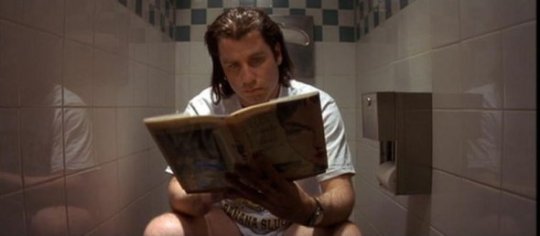
In Pulp Fiction Vincent Vega is constantly on the toilet. One of the side effects of heroin abuse is constipation.
For Interstellar, Christopher Nolan planted 500 acres of corn just for the film because he did not want to CGI the farm in. After filming, he turned it around and sold the corn and made back profit for the budget.
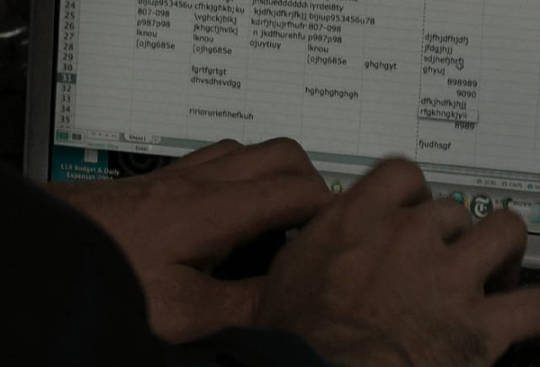
In The Movie ”Unthinkable” You See A Guy Try To Defuse A Nuclear Bomb With Excel.
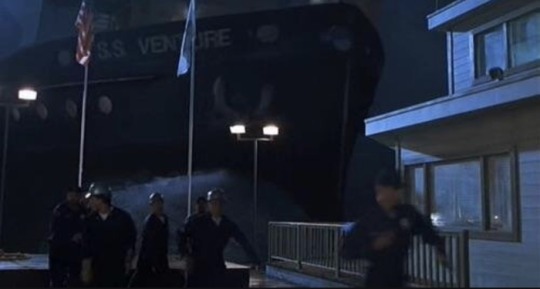
In The
Lost World: Jurassic Park, the ship that brings the T-Rex to San Diego
is called the S.S Venture, which is a reference to King Kong, in which a
ship called the S.S Venture brought King Kong to New York.
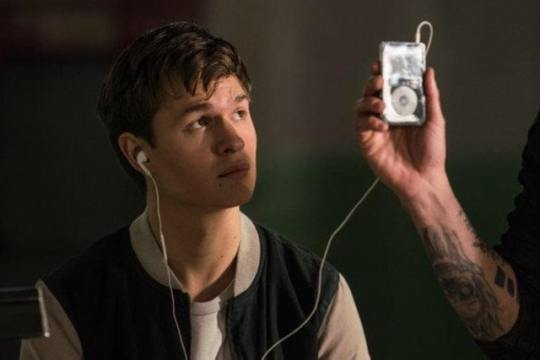
If you watch the film with headphones or properly placed surround sound speakers, every time we see Baby in Baby Driver (2017) wearing only one of his headphones, you’ll hear the song he is listening to through that ear only.
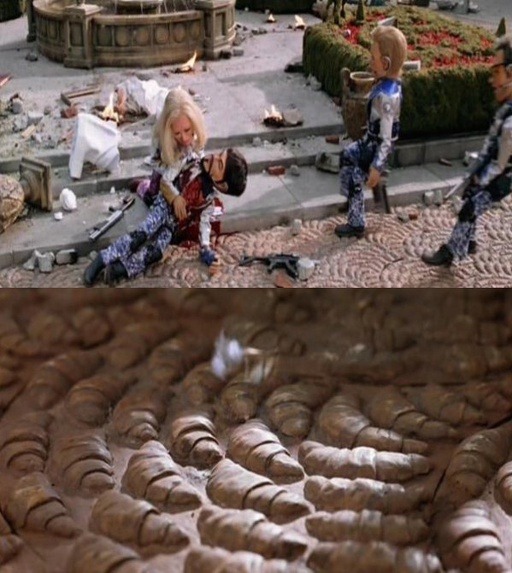
In Team America: World Police, the Paris ‘set’ has a floor made of Croissants.
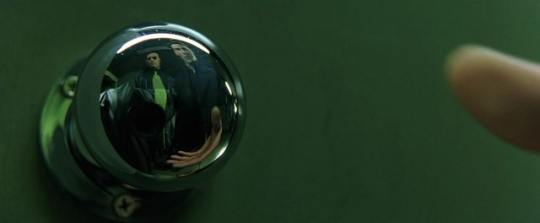
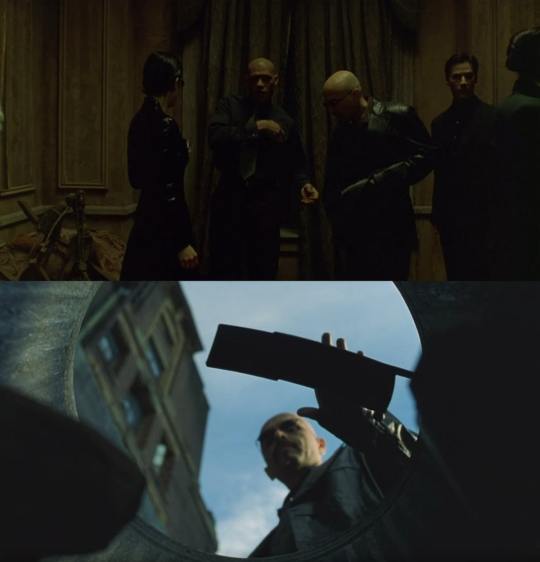
They couldn’t hide the camera in the doorknob’s reflection of this scene of The Matrix, so they put a coat over it and a half tie to match with Morpheus’.
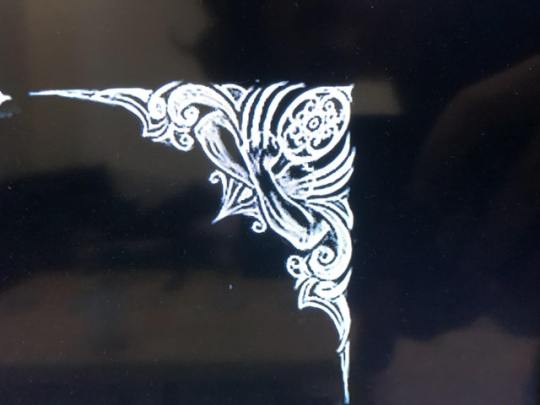
This Wolverine Easter egg in the opening credits border of The Greatest Showman.
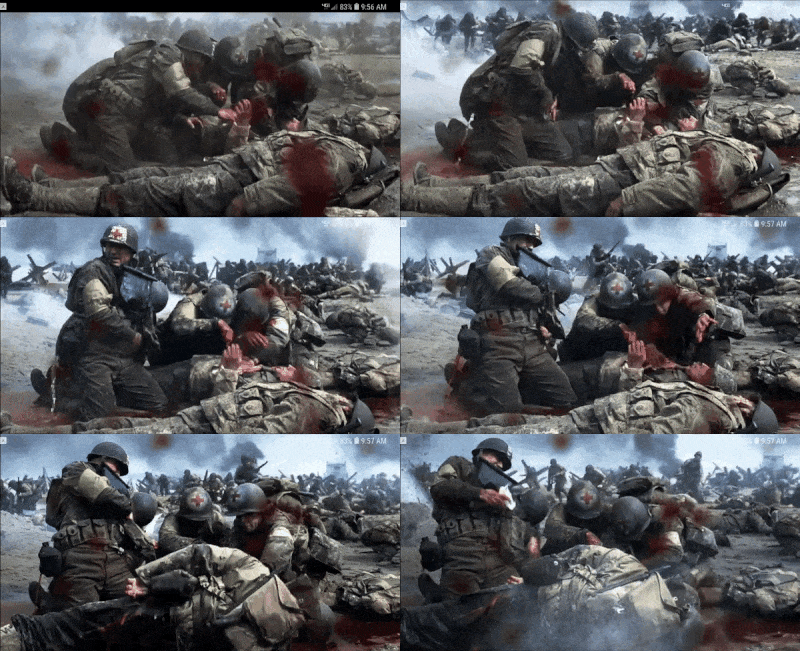
In Saving Private Ryan, a medic gets hit in the canteen. Water first starts to pour out then blood.
In
The Truman Show, the travel agent kept Truman waiting because she has
never needed to show up for work before. Also she is still wearing her
makeup bib since it was a rush job.
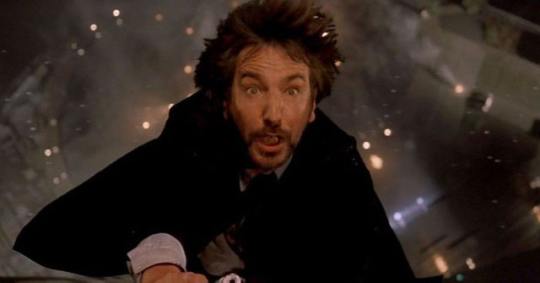
In
Die Hard (1988), Alan Rickman’s Petrified Expression While Falling Was
Completely Genuine. The Stunt Team Instructed Him That They Would Drop
Him On The Count Of 3 But Instead Dropped Him At 1.
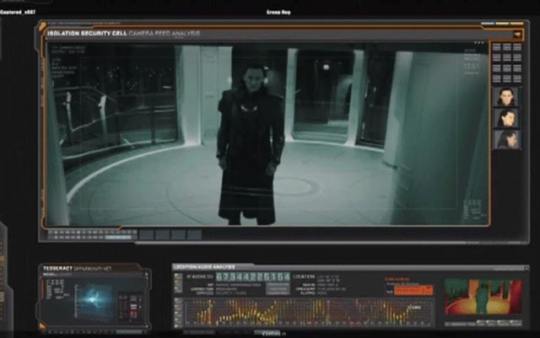
In
‘The Avengers’, there is a small screen showing the heat signature in
the room where Loki is being held which shows that he has a cold body
temperature because he is a frost giant.
In The Lion, the Witch and the Wardrobe, The White Witch’s crown melts as her power dwindles.
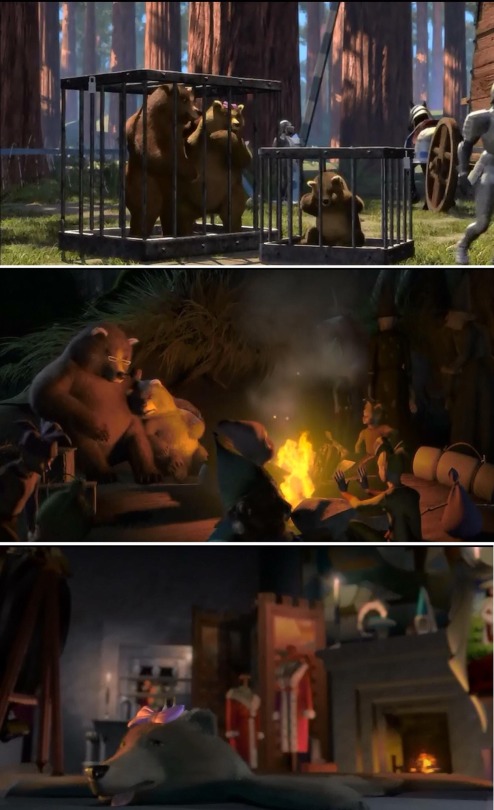
Farquaad kills Mama bear to use as a rug in Shrek.
In The Avengers, Hawkeyes states that “They can’t bank worth a damn, find a right corner.” Jarvis proceeds to plot a route around a corner for Tony.
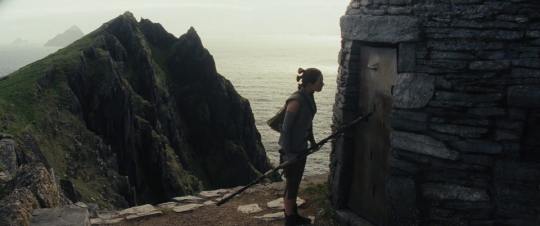
In the Last Jedi, the door for Luke’s shack is made out of a panel from his X-wing.
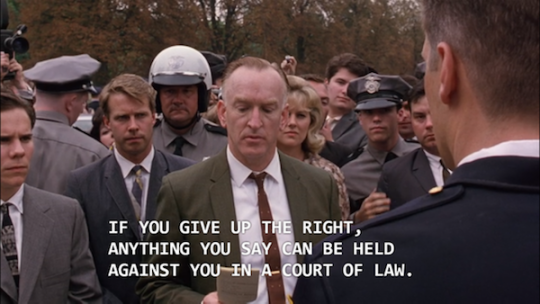
In
The Shawshank Redemption (1994), the DA who arrests the sadistic
Captain Hadley can be seen reading the Miranda rights off of a card. The
scene is set in 1966, the same year that Miranda v. Arizona court case
made the act mandatory when arresting a suspect.
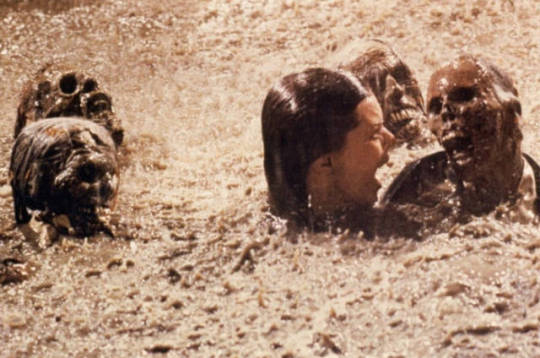
The skeletons from the pool scene in Poltergeist were real, as they were cheaper than rubber skeletons at the time.
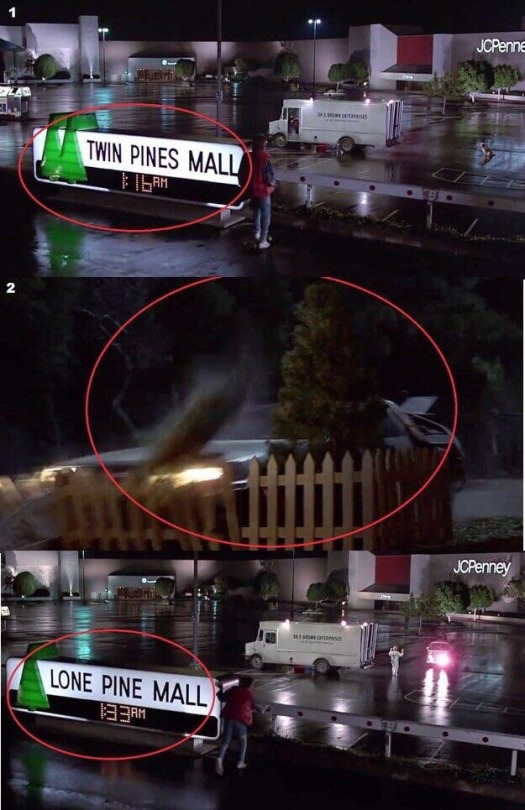
In Back to the Future, when Marty travels to the past and runs over one of the trees, the name of the mall changes.
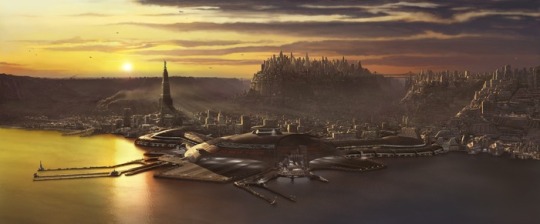
In “The Fifth Element,”
Manhattan, the Statue of Liberty, and the Brooklyn Bridge appear to
tower above the landscape because the sea levels have dropped
significantly, with the city expanding onto the new land.
In the
Matrix, Morpheus asks Cypher for his phone, Cypher hesitates pulling his
hand out of his pocket because earlier he dumped his phone so they
could be tracked. Fortunately, Trinity immediately gives her phone to
Morpheus.
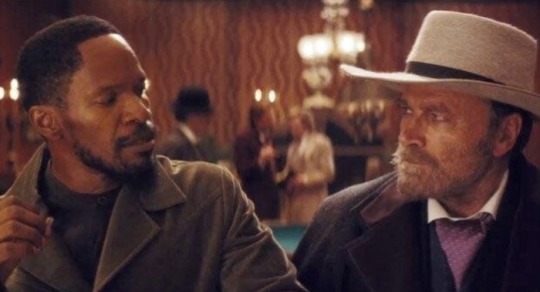
In Django Unchained, A Man Asks Django What Is His Name Is And How It
Is Spelled. “The D Is Silent”, The Man Responds “I Know”. This Man Is
Franco Nero, The Original Django From The Original 1966 Film.
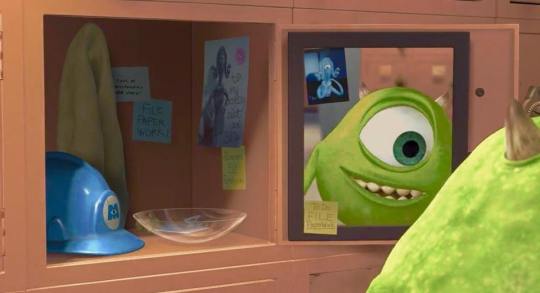
In Monster’s Inc (2001) Mike has 3 sticky note reminders to file his paperwork in his locker, which he later forgets to do, driving the plot of the movie.
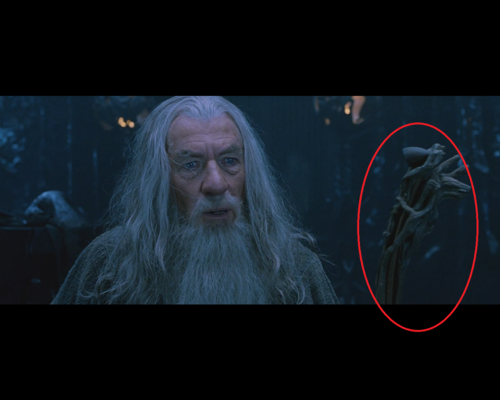
In lord of the rings you can see that gandalf carries his pipe in his staff.
so last night we met up to play D&D but a few people couldn’t make it last minute and we didn’t want to go on ahead without them so we instead did a semi-canon filler episode and played ‘Never Have I Ever’ but as our characters sat round the campfire and it might be one of the best ideas we’ve ever had
The rules are the same as usual; your character can choose not to drink even if they should, or can lie/omit the truth, and others can call bullshit or ask someone to elaborate on their story. No dice need to be rolled, except maybe Con checks to see how drunk everyone is. It requires very little input from the DM (he actually layed as the NPC accompanying us) so it’s a low-effort session for everyone. It’s actually really good for getting into your character’s head as you’re forced to improv parts of their life you might not have thought about before, and also for fostering inter-party relationships, as we discovered some of our party members had a lot in common and earned some respect for each other. Also it was hilarious because we were also getting drunk in real life
If you want to try it, here’s some good questions that we had:
‘Never have I ever…’
Fallen in love
Resented the place I came from
Pretended to be someone else
Stolen something
Broken a promise
Seen a friend die
Killed an innocent person
Fornicated with a member of another race
Been arrested for a crime
so I had a GREAT time with Andavius the other night
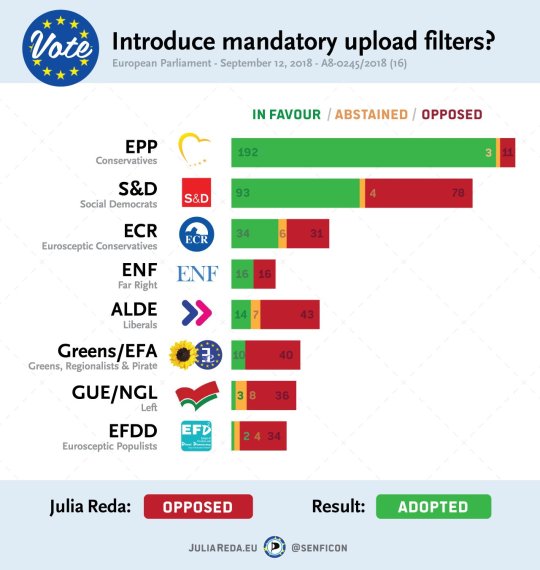
yeah they passed it bc they’re morons but fact remains no one actually knows what this article does (some say it’s just about journalistic articles, some say it’s about music covers, and some about reposting copyrighted images, some on the radio were even claiming google will shut down like..sure jan) and they don’t seem to realize it’s p much impossible to even apply rules like this lol
anyway each individual country will review it and decided if they want it or not, and this over the course of 1+ year or so (if they finally manage to figure out what this article actually does, that is)
Lobbyists for “creators” threw their lot in with the giant entertainment
companies and the newspaper proprietors and managed to pass the new EU
Copyright Directive by a hair’s-breadth this morning, in an act of
colossal malpractice to harm to working artists will only be exceeded by
the harm to everyone who uses the internet for everything else.
Here’s what the EU voted in favour of this morning:
* Upload filters: Everything you post, from short text snippets to
stills, audio, video, code, etc will be surveilled by copyright bots run
by the big platforms. They’ll compare your posts to databases of
“copyrighted works” that will be compiled by allowing anyone to claim
copyright on anything, uploading thousands of works at a time. Anything
that appears to match the “copyright database” is blocked on sight, and
you have to beg the platform’s human moderators to review your case to
get your work reinstated.
* Link taxes: You can’t link to a news story if your link text includes more than a single word
from the article’s headline. The platform you’re using has to buy a
license from the news site, and news sites can refuse licenses, giving
them the right to choose who can criticise and debate the news.
* Sports monopolies: You can’t post any photos or videos from sports
events – not a selfie, not a short snippet of a great goal. Only the
“organisers” of events have that right. Upload filters will block any
attempt to violate the rule.
Here’s what they voted against:
* “Right of panorama”: the right to post photos of public places despite
the presence of copyrighted works like stock arts in advertisements,
public statuary, or t-shirts bearing copyrighted images. Even the
facades of buildings need to be cleared with their architects (not with the owners of the buildings).
* User generated content exemption: the right to use small excerpt from
works to make memes and other
critical/transformative/parodical/satirical works.
Having passed the EU Parliament, this will now be revised in secret,
closed-door meetings with national governments (“the trilogues”) and
then voted again next spring, and then go to the national governments
for implementation in law before 2021. These all represent chances to
revise the law, but they will be much harder than this fight
was. We can also expect lawsuits in the European high courts over these
rules: spying on everyone just isn’t legal under European law, even if
you’re doing it to “defend copyright.”
In the meantime, what a disaster for creators. Not only will be we liable to having our independently produced materials arbitrarily censored by overactive filters,
but we won’t be able to get them unstuck without the help of big
entertainment companies. These companies will not be gentle in wielding
their new coercive power over us (entertainment revenues are up, but the share going to creators is down:
if you think this is unrelated to the fact that there are only four or
five major companies in each entertainment sector, you understand nothing about economics).
But of course, only an infinitesimal fraction of the material on the
platforms is entertainment related. Your birthday wishes and funeral
announcements, little league pictures and political arguments, wedding
videos and online educational materials are also going to be
filtered by these black-box algorithms, and you’re going to have to get
in line with all the other suckers for attention from a human moderator
at one of the platforms to plead your case.
The entertainment industry figures who said that universal surveillance
and algorithmic censorship were necessary for the continuation of
copyright have done more to discredit copyright than all the pirate
sites on the internet combined. People like their TV, but they use their
internet for so much more.
It’s like the right-wing politicians who spent 40 years describing
roads, firefighting, health care, education and Social Security as
“socialism,” and thereby created a generation of people who don’t
understand why they wouldn’t be socialists, then. The copyright
extremists have told us that internet freedom is the same thing as
piracy. A generation of proud, self-identified pirates can’t be far
behind. When you make copyright infringement into a political act, a
blow for freedom, you sign your own artistic death-warrant.
This idiocy was only possible because:
* No one involved understands the internet: they assume that because
their Facebook photos auto-tag with their friends’ names, that someone
can filter all the photos ever taken and determine which ones violate
copyright;
* They tied mass surveillance to transferring a few mil from Big Tech to
the newspaper shareholders, guaranteeing wall-to-wall positive coverage
(I’m especially ashamed that journalists supported this lunacy – we
know you love free expression, folks, we just wish you’d share);
What comes next? Well, the best hope is probably a combination of a
court challenge, along with making this an election issue for the 2019
EU elections. No MEP is going to campaign for re-election by saying “I
did this amazing copyright thing!” From experience, I can tell you that no one cares what their lawmakers are doing with copyright.
On the other hand, there are tens of millions of voters who will vote
against a candidate who “broke the internet.” Not breaking the internet
is very important to voters, and the wider populace has proven
itself to be very good at absorbing abstract technical concepts when
they’re tied to broken internets (87% of Americans have a) heard of Net
Neutrality and; b) support it).
I was once involved in a big policy fight where one of the stakes was
the possibility that broadcast TV watchers would have to buy a small
device to continue watching TV. Politicians were terrified of
this proposition: they knew that the same old people who vote like crazy
also watch a lot of TV and wouldn’t look favourably on anyone who
messed with it.
We’re approaching that point with the internet. The danger of internet
regulation is that every problem involves the internet and every poorly
thought-through “solution” ripples out through the internet, creating
mass collateral damage; the power of internet regulation is that every
day, more people are invested in not breaking the internet, for their
own concrete, personal, vital reasons.
This isn’t a fight we’ll ever win. The internet is the nervous system of
this century, tying together everything we do. It’s an irresistible
target for bullies, censors and well-intentioned fools. Even if the EU
had voted the other way this morning, we’d still be fighting tomorrow,
because there will never be a moment at which some half-bright, fully
dangerous policy entrepreneur isn’t proposing some absurd way of solving
their parochial problem with a solution that will adversely affect
billions of internet users around the world.
This is a fight we commit ourselves to. Today, we suffered a terrible,
crushing blow. Our next move is to explain to the people who suffer as a
result of the entertainment industry’s depraved indifference to the
consequences of their stupid ideas how they got into this situation, and
get them into the streets, into the polling booths, and into the fight.
Cyberpunk: themes of postmodernism, the horrors of neoliberalism, the limits of consciousness.
Steampunk: “what if I could wear an ugly hat”
Steampunk: themes of self-determination, the horrors of colonialism and imperialism, the limits of human invention in a painful societal framework Cyberpunk: “what if i could wear neon lights”
Cyberpunk: what if I could dress like the matrix meets the cenobites
Steampunk: what if fancy Victorian but we slap lil brass wheels on everything and it all looks kinda sepia
So for my AP United States History class we have to write a research paper; my topic is the gay rights movement in America. Today I began reading one of the books that I chose as a source
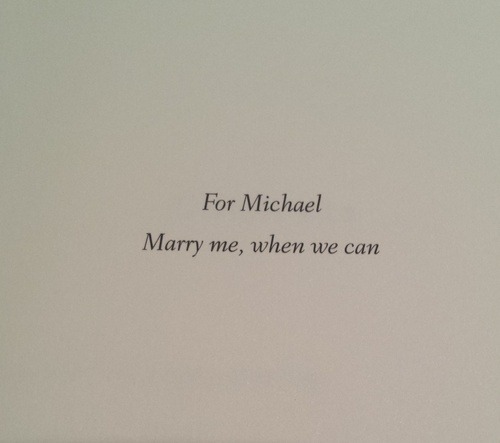
And I opened it up to the dedication page and found this
And if you don’t think that’s one of the sweetest and most romantic things ever then get out of my face
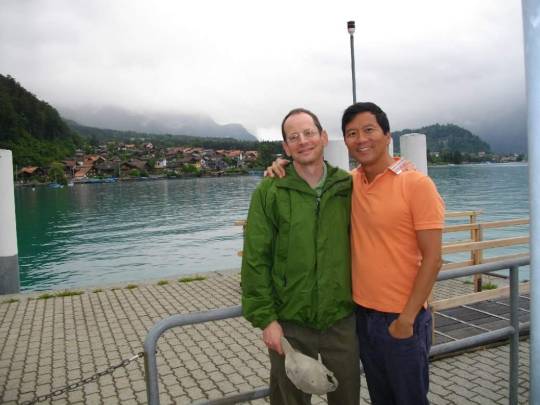
Ok, for the record, the author of this book, Jonathan Rauch, is a friend of my family, I’ve known him since I was a little kid, and I am here to tell you all that he and Michael have been together for 20-odd years now, got married in 2010, and remain to this day obviously, excessively, and adorably in love.
Anyway, they’re cute. Thought y’all would want to know.








 backup blog in case tumblr explodes