8xel:

Sometimes I get so fucking angry when I think about HIV and AIDS too long because the blow out in the US was in the 80s and 90s and I think about all the creative and intellectual people who lost their lives to it and have been continuously swept under the rug as if their humanity was just so contrite.

Our entire generation would be different had they all survived, and sometimes I think about that too long and get all mad tears. It stigmatized the entire queer community, and I feel like the community is still trying to recover and get a grip on a time when it was once socially acceptable to call something GRIDS (Gay Related Immune Deficiency Syndrome) as if that made any fucking sense. Pure propaganda bullshit, seriously. Our president wouldn’t even openly acknowledge it. Actually fuck Reagan because it took approx 21,000 deaths in the US before he even said ‘AIDS.’

And HIV is still so disregarded by the media as if people aren’t falling victim to it like wildfire (a huge part of this is because of the shame and inability to believe everyone is capable of contracting it), and if you ever want a reason to hate, then take a class on the history of HIV and AIDS and take a Biology of HIV and AIDS course because you’ll never come out of it the same once you understand the sociopolitical nightmare surrounding it. You’ll be breathing fire about the injustice and not just sexual orientation discrimination but also the gender and racial discrimination that is still choking people to this day. I’m clearly so angry right now.

The shittiest part being there are new preventative medications going around that no one will fucking talk about, and I don’t know what we need to do to get people on board to make this shit cheap and accessible, but I feel like stapling eyelids open and sitting every shit hole broadcast company and pharmaceutical soul sucker in front of a slideshow of what exactly AIDS did to people before there were antiretrovirals (that still aren’t 100%) and how it is just being a decent human being to spread the information. If not for the basic safety of those currently alive, then at least as respect for every person who lost or is currently losing their life because trust me — I have no fucking delusions this ‘problem’ is almost ‘fixed’ because it’s seemingly subdued in the United States.

It is a problem. This is still a problem. Why isn’t anyone discussing how big of a problem this is?

a-singing-dragonfly:

the-knights-who-say-book:

the-knights-who-say-book:

the-knights-who-say-book:

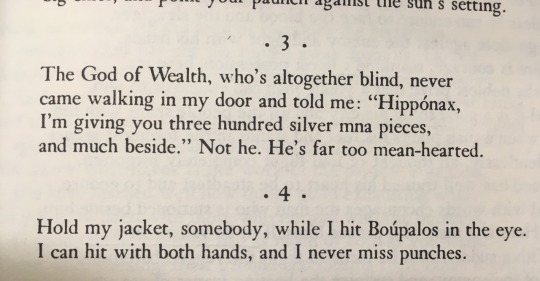
“call out for the god of wealth, he’s never given me 300 silver coins because he’s mean” —Hipponax of Ephesos, sixth century BC

“hold my jacket i’m about to fight Boupalos” —also Hipponax of Ephesos

These aren’t exaggerations

6th century BC Twitter

scholarlypidgeot:

misteryada:

odric-master-swagtician:

loafed-beans:

ethereal-insight:

fedkaczynski:

allamericankindofguy-actual:

fedkaczynski:

What’s funny is that this actually happened. 

I’m unfamiliar with this story please elaborate

Finnish soldier gets separated from the rest of his unit but he’s the only one carrying the emergency amphetamines for the unit, takes too many and goes on a one man rampage for like 2 weeks straight giving the opposing Soviet soldiers nightmares for decades. Oh and he did it all on skis. 

Did he survive?

Yes, during his methed up 2-3 week rampage he got injured by a land mine, travelled 400km on skis, and only ate pine buds and a Siberian Jay that he caught which he ate raw. When he made it back to Finnish lines he was taken to a hospital where it was found his heart rate was nearly 200 beats per minute and his weight had dropped to 43kg (94.7lbs).

His name was Aimo Koivunen if you want to look him up

Those are the eyes of a man who has seen god and laughed

I’ve seen this post before but never seen his picture he looks 1000000% capable of doing all of this and more

captainshroom:

the-neon-pineapple:

captainshroom:

the year is 1888

me, the first palaeontologist to dig up a triceratops skull, whispering softly: what the fuck, what the fuck, what the fuckkkk

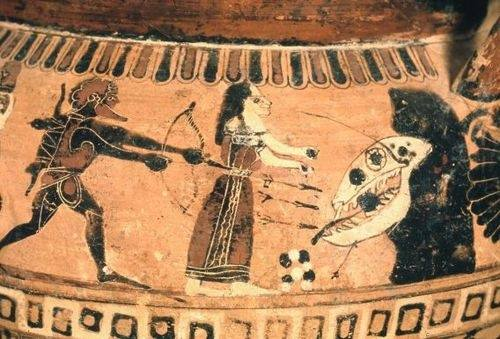
fun fact: modern paleontologists and archaeologists have pointed to some greek vase art of mythological monsters as being evidence that the greeks dug up dinosaur skulls and were like “what the fuck, what the fuck, what the fuckkkk” 

and then they did the Greek Thing and painted naked men fighting the monster 

or, well, a deeply flawed representation of what they imagined the fossil had looked like while alive, an early form of paleoart. 

but sometimes they also just. drew the skull and slapped a black blob monster onto it? anyway i love the greeks.

NICE

thoodleoo:

thoodleoo:

what you’d think the ancient roman republic’s political system is like: a complex but generally functional collection of politicians working together to help rome thrive; after all, the romans took great pride in their republic!

what it’s actually like (roman millionaire voice) mom said it’s my turn on the consulship

#what person with knowledge of politics or rome would assume that romans cared about rome (x)

jumpingjacktrash:

dharmagun:

cincosechzehn:

agirlinjapan:

antifainternational:

mousezilla:

rhube:

fahrlight:

westsemiteblues:

returnofthejudai:

robowolves:

bemusedlybespectacled:

gdfalksen:

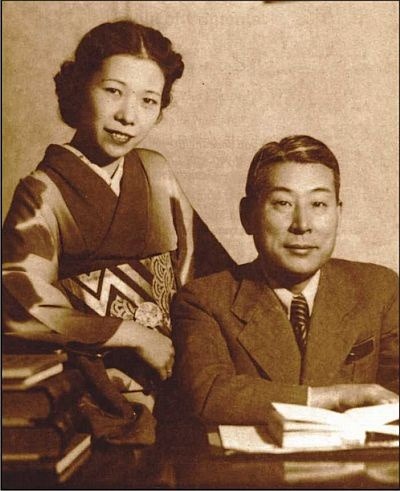
Chiune Sugihara. This man saved 6000 Jews. He was a Japanese diplomat in Lithuania. When the Nazis began rounding up Jews, Sugihara risked his life to start issuing unlawful travel visas to Jews. He hand-wrote them 18 hrs a day. The day his consulate closed and he had to evacuate, witnesses claim he was STILL writing visas and throwing from the train as he pulled away. He saved 6000 lives. The world didn’t know what he’d done until Israel honored him in 1985, the year before he died.

Why can’t we have a movie about him?

He was often called “Sempo”, an alternative reading of the characters of his first name, as that was easier for Westerners to pronounce.

His wife, Yukiko, was also a part of this; she is often credited with suggesting the plan. The Sugihara family was held in a Soviet POW camp for 18 months until the end of the war; within a year of returning home, Sugihara was asked to resign – officially due to downsizing, but most likely because the government disagreed with his actions.

He didn’t simply grant visas – he granted visas against direct orders, after attempting three times to receive permission from the Japanese Foreign Ministry and being turned down each time. He did not “misread” orders; he was in direct violation of them, with the encouragement and support of his wife.

He was honoured as Righteous Among the Nations in 1985, a year before he died in Kamakura; he and his descendants have also been granted permanent Israeli citizenship. He was also posthumously awarded the Life Saving Cross of Lithuania (1993); Commander’s Cross Order of Merit of the Republic of Poland (1996); and the Commander’s Cross with Star of the Order of Polonia Restituta (2007). Though not canonized, some Eastern Orthodox Christians recognize him as a saint.

Sugihara was born in Gifu on the first day of 1900, January 1. He achieved top marks in his schooling; his father wanted him to become a physician, but Sugihara wished to pursue learning English. He deliberately failed the exam by writing only his name and then entered Waseda, where he majored in English. He joined the Foreign Ministry after graduation and worked in the Manchurian Foreign Office in Harbin (where he learned Russian and German; he also converted to the Eastern Orthodox Church during this time). He resigned his post in protest over how the Japanese government treated the local Chinese citizens. He eventually married Yukiko Kikuchi, who would suggest and encourage his acts in Lithuania; they had four sons together. Chiune Sugihara passed away July 31, 1986, at the age of 86. Until her own passing in 2008, Yukiko continued as an ambassador of his legacy.

It is estimated that the Sugiharas saved between 6,000-10,000 Lithuanian and Polish Jewish people.

It’s a tragedy that the Sugiharas aren’t household names. They are among the greatest heroes of WWII. Is it because they were from an Axis Power? Is it because they aren’t European? I don’t know. But I’ve decided to always reblog them when they come across my dash. If I had the money, I would finance a movie about them.

He told an interviewer:

You want to know about my motivation, don’t you? Well. It is the kind of sentiments anyone would have when he actually sees refugees face to face, begging with tears in their eyes. He just cannot help but sympathize with them. Among the refugees were the elderly and women. They were so desperate that they went so far as to kiss my shoes, Yes, I actually witnessed such scenes with my own eyes. Also, I felt at that time, that the Japanese government did not have any uniform opinion in Tokyo. Some Japanese military leaders were just scared because of the pressure from the Nazis; while other officials in the Home Ministry were simply ambivalent.

People in Tokyo were not united. I felt it silly to deal with them. So, I made up my mind not to wait for their reply. I knew that somebody would surely complain about me in the future. But, I myself thought this would be the right thing to do. There is nothing wrong in saving many people’s lives….The spirit of humanity, philanthropy…neighborly friendship…with this spirit, I ventured to do what I did, confronting this most difficult situation—and because of this reason, I went ahead with redoubled courage.

He died in nearly complete obscurity in Japan. His neighbors were shocked when people from all over, including Israeli diplomatic personnel, showed up at quiet little Mr. Sugihara’s funeral.

I will forever reblog this, I wish more people would know about them!

I liked this before when it had way less information. Thank you, history-sharers.

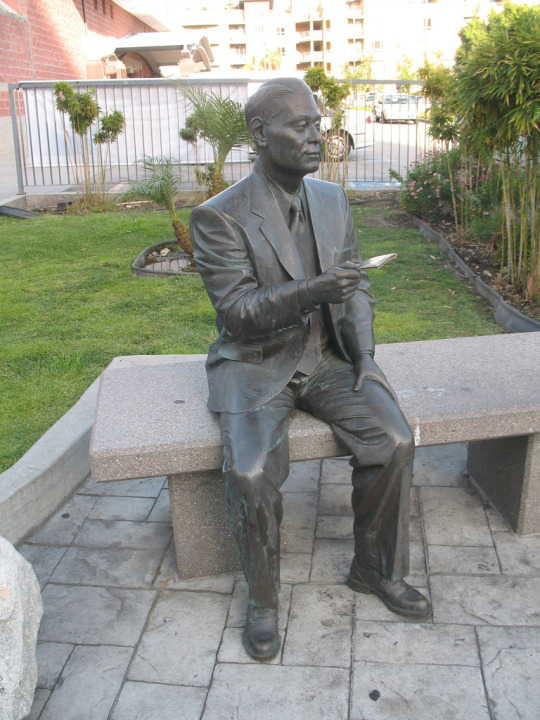
Tucked away in a corner in L.A.’s Little Tokyo is a life-sized statue of Chiune, seated on a bench and smiling gently as he holds out a visa. 

The stone next to him bears a quote from the Talmud; “He who saves one life, saves the entire world.”  

I had no idea it existed until a few weeks ago, but it’s since become one of my favorite pieces of public art. 

Chiune Sugihara.  Original antifa.

PBS made a documentary about Chiune Sugihara in 2005. If you’re interested in him, it’s definitely worth checking out. (The PBS link above even has some interactive information to go along with the film.) Ask your local library if they have a copy/can order you one from another library. You won’t be disappointed!

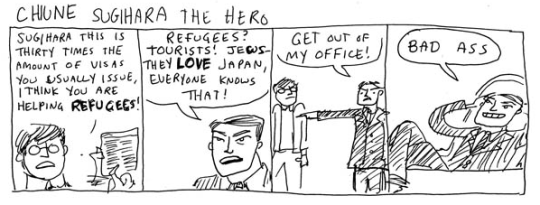
kate beaton wasn’t kidding when she said look him up

i am going to find this and take him a present

always reblog mr sugihara

fantheoriesandfoodporn:

So, fun fact for all of you history dorks, but you know that legend about Cleopatra being so rich and trashy that she would drink her wine with crushed up pearls in it?

Pearls are mostly Calcium Carbonate. When they mix with acids (such as those in wine) they produce carbon dioxide like little balls of fancy alkaseltzer.

What Im saying is, call Cleopatra a trashy hoe all you want, but she was the trashy hoe who invented instant champagne. Bitch was living in 3018 while everyone else was in 18

wtfhistory:

historicity-reblogs:

notyourdamsel-in-distress:

fabledquill:

kogiopsis:

Why Gender History is Important (Asshole)

roachpatrol:

historicity-was-already-taken:

This weekend I was schmoozing at an event when some guy asked me what kind of history I study. I said “I’m currently researching the role of gender in Jewish emigration out of the Third Reich,” and he replied “oh you just threw gender in there for fun, huh?” and shot me what he clearly thought to be a charming smile.

The reality is that most of our understandings of history revolve around what men were doing. But by paying attention to the other half of humanity our understanding of history can be radically altered.

For example, with Jewish emigration out of the Third Reich it is just kind of assumed that it was a decision made by a man, and the rest of his family just followed him out of danger. But that is completely inaccurate. Women, constrained to the private social sphere to varying extents, were the first to notice the rise in social anti-Semitism in the beginning of Hitler’s rule. They were the ones to notice their friends pulling away and their social networks coming apart. They were the first to sense the danger.

German Jewish men tended to work in industries which were historically heavily Jewish, thus keeping them from directly experiencing this “social death.” These women would warn their husbands and urge them to begin the emigration process, and often their husbands would overlook or undervalue their concerns (“you’re just being hysterical” etc). After the Nuremberg Laws were passed, and after even more so after Kristallnacht, it fell to women to free their husbands from concentration camps, to run businesses, and to wade through the emigration process.

The fact that the Nazis initially focused their efforts on Jewish men meant that it fell to Jewish women to take charge of the family and plan their escape. In one case, a woman had her husband freed from a camp (to do so, she had to present emigration papers which were not easy to procure), and casually informed him that she had arranged their transport to Shanghai. Her husband—so traumatized from the camp—made no argument. Just by looking at what women were doing, our understanding of this era of Jewish history is changed.

I have read an article arguing that the Renaissance only existed for men, and that women did not undergo this cultural change. The writings of female loyalists in the American Revolutionary period add much needed nuance to our understanding of this period. The character of Jewish liberalism in the first half of the twentieth century is a direct result of the education and socialization of Jewish women. I can give you more examples, but I think you get the point.

So, you wanna understand history? Then you gotta remember the ladies (and not just the privileged ones).

ask historicity-was-already-taken a question

Holy fuck. I was raised Jewish— with female Rabbis, even!— and I did not hear about any of this. Gender studies are important. 

“so you just threw gender in there for fun” ffs i hope you poured his drink down his pants

I actually studied this in one of my classes last semester. It was beyond fascinating. 

There was one woman who begged her husband for months to leave Germany. When he refused to listen to her, she refused to get into bed with him at night, instead kneeling down in front of him and begging him to listen to her, or if he wouldn’t listen to her, to at least tell her who he would listen to. He gave her the name of a close, trusted male friend. She went and found that friend, convinced him of the need to get the hell out of Europe, and then brought him home. Thankfully, her husband finally saw sense and moved their family to Palestine.

Another woman had a bit more control over her own situation (she was a lawyer). She had read Mein Kampf  when it was first published and saw the writing on the wall. She asked her husband to leave Europe, but he didn’t want to leave his (very good) job and told her that he had faith in his countrymen not to allow an evil man to have his way. She sent their children to a boarding school in England, but stayed in Germany by her husband’s side. Once it was clear that if they stayed in Germany they were going to die, he fled to France but was quickly captured and killed. His wife, however, joined the French Resistance and was active for over a year before being captured and sent to Auschwitz.

(This is probably my favorite of these stories) The third story is about a young woman who saved her fiance and his father after Kristallnacht. She was at home when the soldiers came, but her fiance was working late in his shop. Worried for him, she snuck out (in the middle of all the chaos) to make sure he was alright. She found him cowering (quite understandably) in the back of his shop and then dragged him out, hoping to escape the violence. Unfortunately, they were stopped and he, along with hundreds of other men, was taken to a concentration camp. She was eventually told that she would have to go to the camp in person to free him, and so she did. Unfortunately, the only way she could get there was on a bus that was filled with SS men; she spent the entire trip smiling and flirting with them so that they would never suspect that she wasn’t supposed to be there. When she got to the camp, she convinced whoever was in charge to release her fiance. She then took him to another camp and managed to get her father-in-law to be released. Her father-in-law was a rabbi, so she grabbed a couple or witnesses and made him perform their marriage ceremony right then and there so that it would be easier for her to get her now-husband out of the country, which she did withing a few months. This woman was so bad ass that not only was her story passed around resistance circles, even the SS men told it to each other and honoured her courage. 

The moral of these stories is that men tend to trust their governments to take care of them because they always have; women know that our governments will screw us over because they always have. 

Another interesting tidbit is that there is sufficient evidence to suggest that Kristallnacht is a term that historians came up with after the fact, and was not what the event was actually called at the time. It’s likely that the event was actually called was (I’m sorry that I can’t remember the German word for it but it translates to) night of the feathers, because that, instead of broken glass, is the image that stuck in people’s minds because the soldiers also went into people’s homes and destroyed their bedding, throwing the feathers from pillows and blankets into the air. What does it say that in our history we have taken away the focus of the event from the more domestic, traditionally feminine, realms, and placed it in the business, traditionally masculine, realms?

Badass women and interesting commentary. Though I would argue that “Night of Broken Glass" includes both the personal and the private spheres. It was called Kristallnacht by the Nazis, which led to Jewish survivors referring to it as the November Pogrom until the term “Kristallnacht" was reclaimed, as such.

None of this runs directly counter to your fascinating commentary, though.
READ THIS.

mdmshakespeare:

deliriumcrow:

kyraneko:

badaam-buffness:

gettysburgaddress:

inoue-takehiko:

evilscum:

deenoverdami:

I want you all to know that an Arab Muslim from Tunis proposed the Theory of Evolution near 600 years before Charles Darwin even took his first breath. Don’t let them erase you.

his name is Ibn Khaldun

Also, it was not the apple falling from a tree that made Issac Newton “discover” gravity. He was reading the books of Ibn Al Haytham, an Arab Muslim from Iraq, who pioneered the scientific method, discovered gravity and wrote about the laws governing the movement of bodies (now known as Newtons three laws of motion) some 600 years before Newton existed. Without him, modern science as we know it wouldn’t exist. Read on him. His achievements are far greater than what I’ve just mentioned here.

#no offense but arabs literally invented chemistry and algebra and we came up with the concept of the camera #the cataract operation that’s still practiced today was invented by an Arab #we created alchemy and the wright brothers used abbas ibn firnas’ findings and writings to build on to create a plane #I could go on and on and on #pls don’t erase our scientific history

I reblog this post every time I see it

We fucking replaced a Muslim scientist with an apple?

In the middle ages, THE place to go for an education was the middle East, or, failing that, Spain. The Muslim world didn’t have the same limits placed on scientific inquiry that the Christian world did, and since they were willing to look at more than just Aristotole and actually compare texts to the observable world, they had some incredible scientific and mathematical advancements. And street lights and toilets. I mean theories and algebra are great and all, but street lights and toilets. In the 12th century. Also medical advancements, and fewer rules against women studying. Hell, women *should* be the ones studying the female body, would you rather a woman see your female relatives, or some old man? Would you rather have someone who lives in the same kind of body, or one who has no first hand idea what the parts can do?

Europeans erased centuries of knowledge from the East because of fear. When we “rediscovered” it, we were still too egotistical to admit that non-whites could have been smarter, so we invented our own mythology.

Bring credit back where it’s due. Honor the true pioneers.